


By Pavel Manchenko, Founder and Managing Director, Marine MAN
A dredger is a ship and a production plant at the same time. It has to navigate, manoeuvre and keep its crew safe like any other vessel, but its real purpose is to move sediment: to dig, load, transport and place sand, silt or rock to a precise design, often around the clock and within tight environmental limits. That dual nature makes dredgers, in my experience, some of the hardest vessels in the world to crew.
A trailing suction hopper dredger or a cutter suction dredger is only as productive as the people who run it. The dredge master who plans each cycle, the operators who control drag heads and cutter ladders, and the engineers who keep dredge pumps, high-voltage systems and hydraulics running all have a direct impact on production. When one of these seats is empty, or filled with the wrong person, the project feels it within days.
In this article I look at what makes dredging crews different, why key positions are so hard to fill, and how contractors can turn crewing from a recurring headache into a managed part of project delivery.
What makes a dredging crew different
Most merchant vessels have a clear division between the deck and engine departments. On a dredger, a third discipline sits on top: dredging production. Deck officers need to understand how the vessel behaves while trailing at low speed with drag arms down, or while swinging on a spud and anchors as a cutter dredger works the face. Engineers need to maintain not only the main engines and generators but also dredge pumps, jet pumps, cutter drives and the wear parts that suffer from constant contact with abrasive material.
Work is usually continuous. Many dredgers operate 24 hours a day, seven days a week, with crews working in shifts to keep production going. Maintenance windows are short and must be planned carefully, because every hour alongside is an hour of lost output. This rhythm demands crews who are not only competent but also experienced in working together under pressure.
Dredging projects also vary enormously. One contract may involve maintenance dredging in a busy port, the next land reclamation offshore, the next an environmental clean-up or a trench for an export cable. Each requires a slightly different mix of skills and equipment, and a crew that excelled on one project may need support on the next.
The hardest seats to fill
Some positions are especially difficult.
The dredge master is the heart of production. He combines nautical knowledge with an understanding of soil, equipment and survey data, decides how each cycle is run and coordinates with the project team ashore. Good dredge masters typically spend many years as officers on dredgers before taking the role, and there are only so many of them.
Cutter operators, often called levermen, control the cutter head and ladder on a cutter suction dredger. Their skill determines how efficiently material is cut and pumped, and how much wear the equipment suffers. The job is learned over long periods on board.
Masters and chief officers of hopper dredgers need strong ship-handling skills as well, since the vessel sails fully loaded through narrow channels and busy port approaches to reach its discharge area, sometimes many times a day.
Engineers on hopper and cutter dredgers face systems that deep-sea engineers rarely see: large dredge pumps, high-voltage distribution, complex hydraulics and pipeline systems for pumping material ashore. Electro-technical officers with experience of these systems are in particular demand.
Specialist roles such as sandfill or reclamation masters, who manage material placement and pipeline layouts ashore, complete the picture. None of these positions can be filled from a general pool of seafarers without careful screening.
Why the talent pool is so small
The core reason is simple: few seafarers ever work on a dredger. The global dredging fleet is small compared with the merchant fleet, so the number of officers and engineers who have gained dredging experience is limited. Training centres can teach theory, but the practical skills come from time on board, often over years.
The structure of the industry adds to the problem. Large contractors tend to develop their own people, and experienced dredging crews often stay with one company for long periods. That is good for the contractor but leaves fewer experienced people available on the open market.
Project-based work makes things harder still. A contractor may need a full crew for a large reclamation project for 18 months and then have no comparable work in the same region. Experienced people who are released at the end of a project may take jobs in other sectors and never return.
Mobilisation: the project clock starts before the crew arrives
Dredging projects move around the world. A contractor may need a full crew in the Middle East this quarter, in West Africa the next and in South America after that, often at short notice when a tender is won.
Mobilising a crew is not just a matter of booking flights. Visas and work permits vary by country and can take weeks. Medical certificates, vaccinations and country-specific requirements must be in order. Clients and port authorities may require their own inductions, and some countries impose local content rules that set a share of local crew. Each of these steps can delay the start of dredging, and a late start can mean penalties under the contract.
Demobilisation needs the same care. Crews must be repatriated, final wages settled and documents returned in order. The way a contractor ends one project shapes whether experienced people want to join the next.
That turns crewing into a project risk. A late or poorly matched crew does not only raise costs; it threatens production targets, environmental compliance and delivery dates written into the contract. It deserves the same attention in the project risk register as weather, soil conditions and equipment availability.
Practices that work
Contractors that handle this well tend to do a few things consistently.
They keep a documented pool of dredging-experienced officers and engineers, not just the current crew. That pool includes people who are between projects, people who have recently left and people with transferable skills who could be brought in with training. Certificates, experience by dredger type and availability are kept up to date, so that the pool can be used the moment a tender is won.
They plan mobilisation together with the project schedule. As soon as a tender looks likely, they check visa requirements, medical rules and local content obligations, and identify which crew members will be needed and when.
They invest in succession. Junior officers and engineers are given structured exposure to dredging operations, so that the next generation of dredge masters and senior engineers grows from within rather than being hired from competitors at a premium.
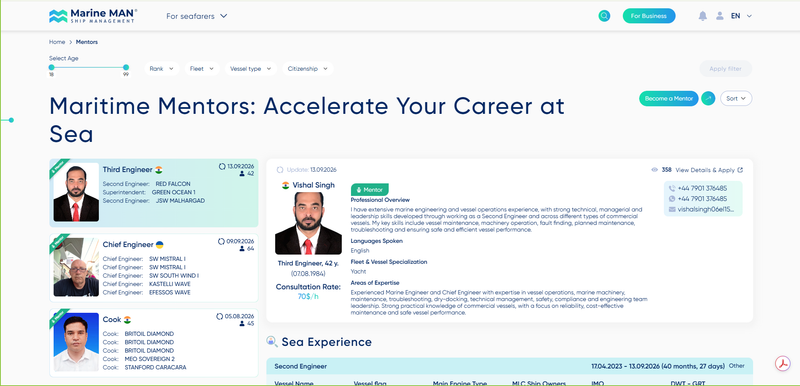
The BIMCO/ICS Seafarer Workforce Report has made the officer shortage an industry talking point. Dredging feels it more sharply than most, because a dredge master cannot be trained in a classroom. At Marine MAN we stopped talking about the gap and started closing it. JobMarineMan is the first crewing platform with a mentorship programme for seafarers, and it is already live: experienced masters, chief engineers and specialist officers apply, we verify their sea service and approve them, and they become visible to every seafarer on the platform. A second engineer who wants to move into dredging can find a chief engineer who has spent his career on hopper dredgers and learn from him directly; the terms are agreed between the two of them, and we stay out of it. Our role is to guarantee that every mentor is who he says he is. Nobody else in crewing has done this. That is how a new generation of specialist seafarers is being built, one mentor at a time.
And they measure crewing as they measure production. Time to mobilise, retention of key ranks from one project to the next and the share of critical positions filled by dredging-experienced people are simple indicators that show whether the crewing approach is working.
Widening the search
Dredging experience is ideal, but in our experience at Marine MAN it is not the only route. Engineers from offshore support vessels, heavy-lift ships and large tugs often have experience with comparable power, hydraulic and positioning systems, and many of them browse marine jobs outside their own segment. With a structured induction and supervision from experienced colleagues, they can become valuable members of a dredging crew.
Deck officers with DP or anchor-handling backgrounds can also adapt well, particularly on vessels with advanced positioning systems. The key is to identify transferable skills early and plan the training needed to close the gap, rather than waiting until a position is empty.
Ratings deserve the same attention. Dredgers rely heavily on skilled welders and fitters who repair drag heads, cutter teeth and pipelines, often in difficult conditions. Fitters and welders from shipyards, offshore construction or heavy industry can bring valuable skills, provided they also hold the required seafarer certification and adapt well to life on board.
Between projects: keeping specialists connected
The gap between two projects is where many contractors lose their best people. A dredge master released at the end of a contract will not wait months without income for the next tender to be awarded. Keeping specialists connected during these periods, through standby arrangements, short assignments on other vessels or simply regular contact about upcoming work, preserves the pool for when it is needed again.
A crewing partner with a wide view of the market can help here, placing specialists on suitable vessels between projects and bringing them back when the contractor needs them.
Questions to ask a crewing partner
Contractors who outsource part of their crewing should look for clear answers to a few questions:
• How many dredging-experienced officers, engineers and operators can you present, and for which dredger types?
• How do you verify certificates, experience and references?
• How quickly can you mobilise a crew to a new country, including visas and medicals?
• How do you handle wages, contracts and compliance with the Maritime Labour Convention?
• What do you report, and how often?
The answers show whether a partner can support a project from tender to demobilisation, or only fill the occasional vacancy.
How we support dredging contractors at Marine MAN
Since I founded Marine MAN in 2007, we have supported shipowners and operators with crew sourcing and crew management. We are an IMO DOC holder certified to ISO 9001:2015 by Bureau Veritas, around 750 seafarers serve on board client vessels through us at any given time, and our crews come from Ukraine, Georgia, India, Sri Lanka, Indonesia, Vietnam and the Philippines.
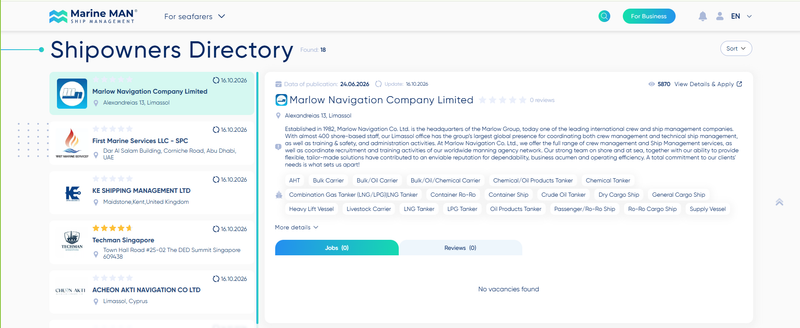
Many experienced seafarers now type "job for seaman" into a search engine rather than call an agency, and our platform JobMarineMan meets them there. With 200,000 CVs in 11 languages, it lets contractors find specialist profiles directly, while our team handles verification, documentation and mobilisation.
Dredging contractors know their equipment down to the last wear part, but crew is often the one input they plan last. A dredger with the right people on board from day one delivers more than any upgrade can.
Conclusion
Dredgers will keep deepening ports, building new land and preparing the seabed for offshore energy. The vessels are complex, but the hardest part is often finding the people who can run them. Contractors that maintain a verified pool of dredging specialists, plan mobilisation alongside the project and widen their search to transferable skills will start projects on time and keep production steady. For dredging contractors, the best crew plan is the one made before the project starts.
About the author
In 2007, a 20-year-old deck officer from Kherson looked at how seafarers found work and decided it was broken. Contracts came by fax. Agencies sat between a captain and his next ship like toll booths, each one taking a cut and adding a week. Pavel Manchenko had been on the other side of that chain, on the bridge, waiting for a call that never came on time. So he founded Marine MAN to fix it.
Nineteen years later, he is still not 40, and the fix has become an ecosystem: recruitment offices in Ukraine, Georgia, India, Sri Lanka, Indonesia, Vietnam and the Philippines under one Marine MAN umbrella, connected on a single platform where AI now makes the first contact with a candidate and a human makes the decision. The numbers behind it: 200,000 seafarer profiles in the database, around 750 seafarers on board client vessels at any moment, and more than 35,000 seafarers who found their job through the platform. He holds a Master's degree from the Kyiv State Academy of Water Transport and is a certified DPA, CSO and MLC 2006 auditor, and he uses all of it: he still consults and mentors shipowners and crews on compliance, and he looks at every crew list the way an inspector would, because he has stood on the deck those inspectors walk.
Dredging contractors know what mobilisation under pressure looks like. Pavel knows it from 2022. Marine MAN's base and most of its core staff were in Kherson, the first regional capital in Ukraine to be occupied, which made his company the first crewing business in the country to experience war directly. The team scattered, communication broke, and the company had to be reassembled from fragments in the hardest year of its life. Crew changes went ahead anyway, and every seafarer was paid on time. A crewing partner who has mobilised his own company out of an occupied city does not panic when a project moves from the Gulf to West Africa at a month's notice.
His own summary of that year is one line: "Never retreat, never surrender, and keep faith in God."
He has the energy of a founder half his age and the experience of one twice it. If you want to talk about how your fleet is crewed, talk to Pavel.
Let's discuss cooperation. Want to know how our team can help your business? Contact us: b2b@marineman.eu
Note: The opinions, beliefs, and viewpoints expressed in this article do not necessarily reflect the opinions of DredgingToday.com.